Social Commerce Needs a Better Definition
Social commerce needs a better definition. Most definitions are technically correct and still not useful. They say social commerce is buying and selling products through social media platforms. Fine. But that definition misses why the category matters and why brands are reorganizing around it.
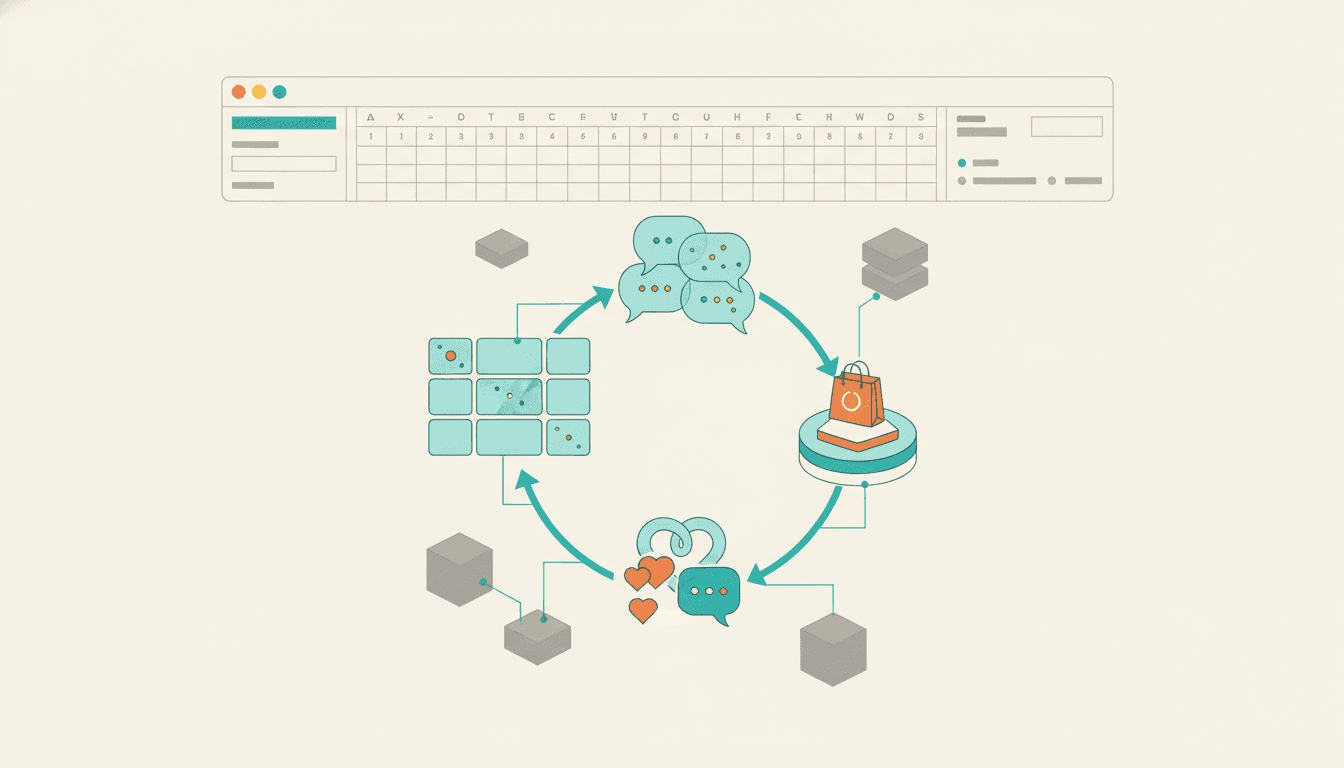
The better definition is this: social commerce is the loop where discovery, conversation, trust, and checkout happen close enough together that the customer never feels like they left the moment that created demand.
That is the piece traditional e-commerce does not capture. A website is built for people who already decided to shop. Social commerce is built for the moment before that, when someone sees a product in a feed, watches someone use it, asks a question, gets social proof, and decides whether the brand is worth trusting.
The old definition is too channel-centric
If you define social commerce as "commerce on social platforms," you end up organizing around platforms. TikTok Shop becomes one channel. Instagram Shops becomes another. Live selling, affiliates, and DMs all become separate programs.
That is how most brands already operate. The problem is that customers do not experience it that way. They might discover a product in a TikTok video, ask a sizing question in Instagram DMs, search the brand on Amazon, and finally buy from Shopify after seeing a creator's second post. The brand calls those channels. The customer calls it one decision.
Shopify's social commerce documentation is useful because it names the sales-channel layer. McKinsey's social commerce framing is useful because it names the behavior shift: consumers are interacting with brands in new, more direct ways. The next step is connecting those two views into one operating model.
Social commerce is not a checkout feature
Native checkout matters. TikTok Shop matters. Instagram product tags matter. Buy buttons matter. But if the category becomes only about checkout location, we miss the bigger shift.
The checkout is the receipt. The commerce happened earlier.
It happened when a creator made the product feel credible. It happened when the comment section answered objections. It happened when the brand responded quickly enough that the customer stayed warm. It happened when the buyer could ask, "Will this work for me?" and get an answer before the moment disappeared.
That is why social commerce is not just a storefront problem. It is a response-time problem, a trust problem, a product-context problem, an attribution problem, and a customer-memory problem.
The unit of value is the conversation
In traditional e-commerce, the unit of value is the session. A person lands on your site, browses, adds to cart, checks out, or leaves.
In social commerce, the unit of value is the conversation. Sometimes that conversation is literal, like a DM. Sometimes it is distributed, like a creator video, comment thread, live stream, story reply, and follow-up message all shaping the same purchase decision. Either way, the brand has to understand and act on customer intent while the conversation is still alive.
That is a different motion. You cannot solve it with a landing page alone. You cannot solve it with a social scheduler. You cannot solve it with a support inbox that treats every message like a ticket. You need the ability to turn social intent into a guided purchase path.
A more useful definition
Here is the definition I keep coming back to:
Social commerce is commerce shaped by social context, where discovery, conversation, trust, and transaction operate as one connected loop.
That definition is useful because it tells you what to build. Capture social context. Understand intent. Respond in the moment. Route to the right checkout. Keep the relationship after the transaction. Measure the full loop, not just the last click.
This is what we're building at GrowthSync
GrowthSync exists because the loop is broken for most brands. Discovery happens on TikTok and Instagram. Questions happen in DMs and comments. Product truth lives in Shopify or Amazon. Customer history lives somewhere else. Support lives in another inbox. The team tries to stitch it together manually after the customer has already moved on.
We are building the operating layer for that loop: every sales channel, every customer conversation, one system that can understand what the customer wants and help the brand act on it. If this is the definition of social commerce you are building toward, start with GrowthSync here.
Sources
Social commerce sales channels - Shopify Help Center
Social commerce: The future of how consumers interact with brands - McKinsey
Sources and GrowthSync read
GrowthSync reads this as evidence that social replies are no longer just community management; they are part of the buying workflow and need routing, memory, and speed.