Why Your CRM Wasn't Built for Social Commerce
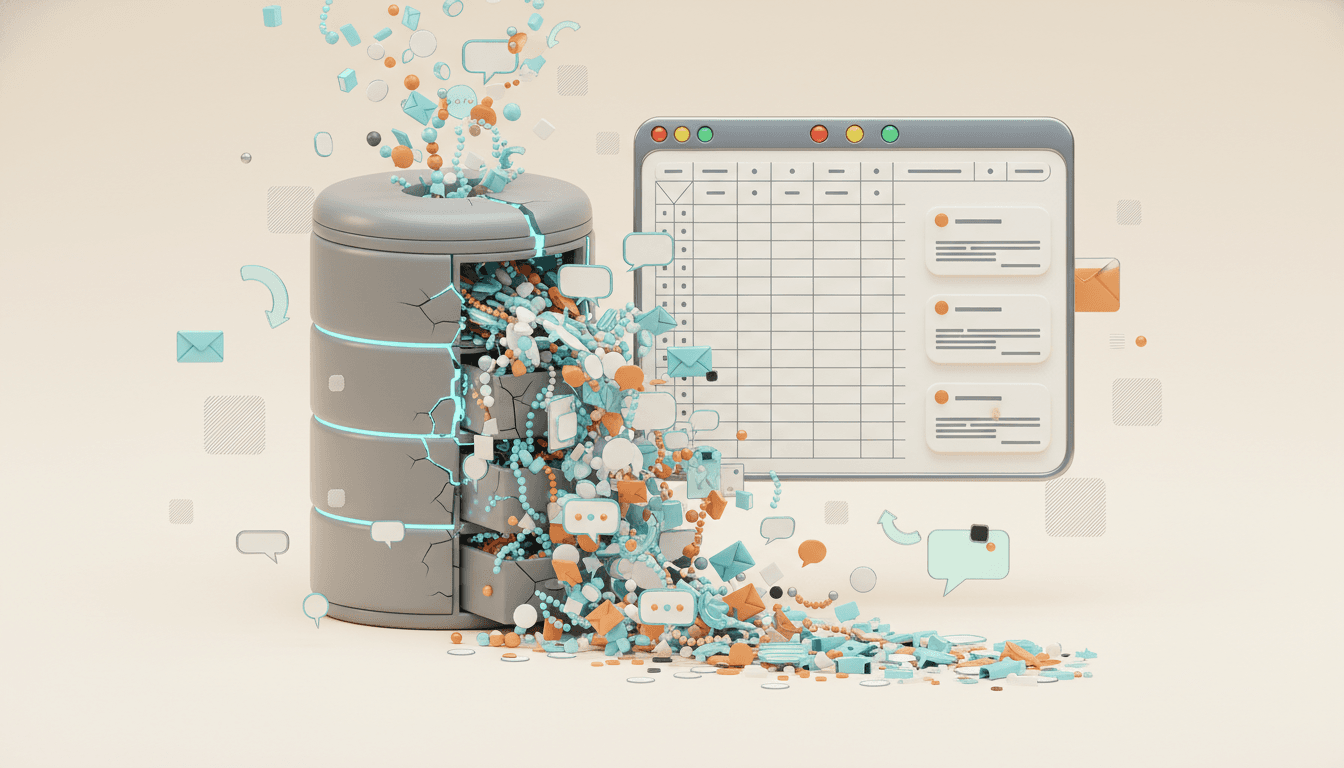
Your CRM was designed for a world where customer interactions happen through forms, emails, and phone calls. A lead fills out a form on your website. The CRM captures it. A sales rep follows up. The interaction is tracked in a pipeline. This model works beautifully for B2B sales and email-driven e-commerce. It completely falls apart in social commerce.
Social interactions break the CRM model
Social commerce interactions are fundamentally different from what CRMs were built to handle. They're real-time, a customer expects a response in minutes, not hours. They're high-volume, hundreds or thousands of interactions per day across DMs, comments, and stories. They're multi-channel, the same customer might comment on a post, then DM you, then reply to a story. And they're conversational, they don't follow a linear pipeline. They're fluid, context-dependent dialogues.
The Frankenstein stack
Because CRMs can't handle social, brands have cobbled together workarounds. They use Instagram's native inbox alongside ManyChat alongside Gorgias alongside their CRM alongside a spreadsheet to track conversions. The customer context is fragmented across five systems. No one has a complete picture of any customer interaction. It's like running a store where the sales floor, the register, and the inventory system don't talk to each other.
What social commerce infrastructure needs
Social commerce needs a system built from the ground up for the way social interactions actually work. Real-time message handling across platforms. AI-powered response at scale. Native product catalog integration with instant checkout generation. Conversation-level attribution that connects every interaction to revenue. This isn't a feature you bolt onto a CRM. It's a fundamentally different system designed for a fundamentally different type of customer interaction.
Sources and GrowthSync read
GrowthSync reads these sources as directional evidence for a practical operating layer: capture the signal, understand the customer context, and route the next action while intent is still fresh.